Roasted Bailey: A Fresh Take on Handwritten Elegance for Modern Branding
A Designer’s First Impression: Opening the Brand Board
I recently started a rebranding project for a small artisanal bakery, and I was looking for a font that could capture both warmth and sophistication. The blank brand board stared back at me, waiting for a personality to shape it. I had a few script fonts in mind, but when I dropped in Roasted Bailey, something clicked immediately. It wasn’t overly formal like traditional calligraphy fonts, nor was it too casual like some of the trendy brush scripts I’ve tried. It felt like a perfect middle ground—refined, yet personal.
What Makes Roasted Bailey Stand Out
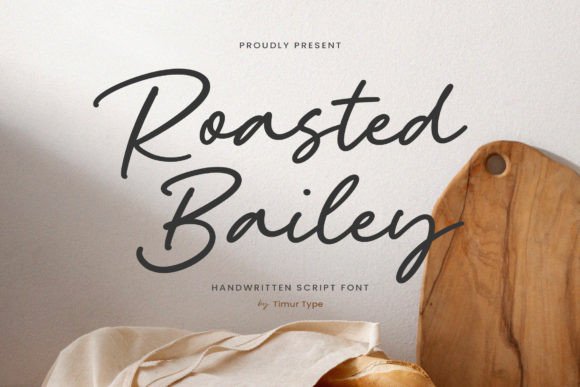
Roasted Bailey is a handwritten script font that blends classic calligraphic influences with a modern, clean aesthetic. It carries the fluidity and organic feel of a real pen-on-paper stroke, but with just enough polish to feel intentional. The letterforms are slightly bouncy, with subtle contrast between thick and thin lines, giving it a sense of movement and energy. It's the kind of font that works beautifully in branding where you want a human touch without sacrificing professionalism.
One of the first things I noticed was how well it performed in a logo concept. I tested it on a circular badge for the bakery and was surprised by how legible and elegant it looked, even at smaller sizes. That’s not always the case with script fonts, which can easily become illegible or too ornate.
Real-World Testing Across Brand Touchpoints
I took Roasted Bailey through a full branding mockup process: logo, packaging, business cards, social media layouts, and even a simple website header. Here’s how it held up:
- Logo Design: The font’s natural flow and soft curves gave the logo a warm, approachable feel. It read well both in color and in black and white.
- Packaging Design: On a mockup of a pastry box, the font added a touch of elegance without feeling stuffy. It looked especially nice on a matte finish with a gold foil accent.
- Business Cards: At small sizes, the font held up better than expected. Kerning was consistent, and there was no noticeable loss of clarity.
- Social Media Graphics: Used for short headlines on Instagram posts, Roasted Bailey stood out without being overwhelming. It paired nicely with a clean sans serif for body text.
- Web Headers: I embedded the font via a webfont service, and it rendered cleanly across browsers. It worked well as a hero header on a simple landing page.
When Roasted Bailey Shines—and When It Doesn’t
This font is best used as a display font or accent typeface. It’s not ideal for long-form body text or technical documentation due to its stylistic nature and varying baseline. That said, for short phrases, headlines, logos, and decorative elements, it brings a lot to the table.
I wouldn’t recommend using it for corporate identities that require a very formal tone. It’s more at home in creative studios, local cafes, lifestyle brands, and handmade shops where a personal, artisanal feel is desired.
Pairing Roasted Bailey with Other Fonts
One of the most important aspects of using a script font like Roasted Bailey is finding the right pairing. I tested it with a few different companions:
- Sans Serif: A clean, modern sans like Montserrat or Lato balanced the script beautifully for a contemporary look.
- Serif: For a more traditional pairing, I tried it with a light serif like Playfair Display. It created a nice contrast while maintaining a cohesive typographic voice.
- Other Scripts: I avoided stacking it with other script fonts to prevent visual clutter, but used it effectively as the only script in multi-font layouts.
The font includes a range of alternates and ligatures, which allowed for subtle customization without overdesigning. I appreciated the ability to tweak letterforms for specific words or brand names.
Practical Considerations for Real Design Work
Before locking in any font for a client project, I always test it in multiple contexts. With Roasted Bailey, I made sure to:
- Check legibility at various sizes across print and digital formats.
- Verify that it rendered well on different screens and printing methods.
- Ensure that the character set supported the languages needed for the brand (especially since the bakery had a French-inspired name).
- Confirm that the font license allowed for commercial use across all intended deliverables, including packaging, website, and merchandise.
It’s also worth noting that Roasted Bailey comes in a variety of file formats, including OTF, TTF, and WOFF, which made it easy to install and use across design tools like Adobe Illustrator, Photoshop, and Figma.
Final Word: A Versatile Script for Modern Branding
If you’re looking for a handwritten font that feels both elegant and approachable, Roasted Bailey is definitely worth testing. It’s a solid choice for brand identity, packaging design, and social media visuals where personality and clarity matter. It’s not a one-size-fits-all solution, but when used thoughtfully, it brings a unique charm that can elevate a brand’s visual language.
As with any premium font, I recommend downloading a demo or testing it in a low-stakes project first. And always double-check the commercial font licensing to ensure you’re covered for all intended uses. With that in mind, Roasted Bailey is a reliable and stylish addition to any designer’s toolkit.